

How Digital Domain Summoned the Supernatural: Inside the VFX of The Conjuring: Last Rite
10.29.25
Featured in ProductionHUB
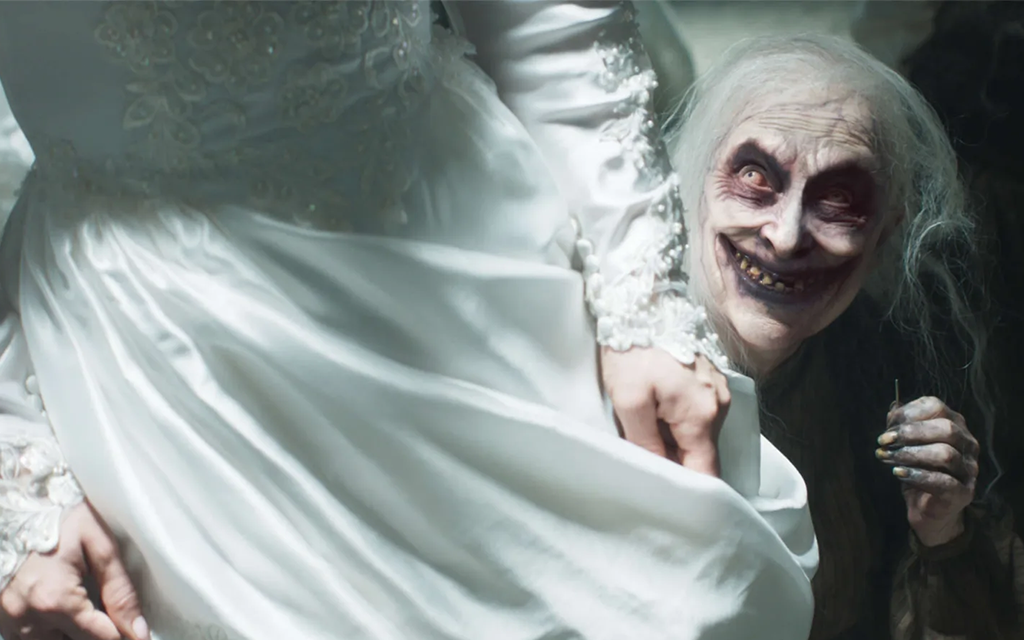
With The Conjuring: Last Rites claiming the title of highest-grossing horror film of 2025, Digital Domain played a spine-chillingly pivotal role in bringing its terror to life. Under the expert leadership of VFX Supervisor Alex Millet, the team delivered 425 breathtaking, photo-realistic shots that elevated the film’s most haunting sequences—from the monstrous CG transformation of the iconic Annabelle doll to the eerie, hall-of-mirrors nightmare that left audiences trembling. Combining cutting-edge tools like Houdini FX, Nuke, Maya, Solaris, Photoshop, and V-Ray, the artists at Digital Domain blurred the line between the supernatural and the real, crafting a world that feels as authentic as it is horrifying.
PH: The Conjuring franchise has such a distinct visual and tonal language. How did you and your team approach designing effects that felt both fresh and terrifying while staying true to the established world?
Alex Millet: We always try our best to keep the effects invisible—blending them seamlessly, or extending what was shot so the audience feels the scare without thinking about how it was achieved. A big part of our work was the Smurl street environment and the hallway destruction—floor breaking, walls tearing apart—but even there, we kept things grounded and matched to the practical sets as much as possible. And then there are the cursed objects of The Conjuring universe, such as the mirror, or the iconic ones like the Annabelle doll, which the audience already has a relationship with. Our job was to bring them to life in a way that feels authentic, but gives them a little extra bite, so the visual effects hit harder than ever.
PH: What was your collaboration like with director Michael Chaves and the practical effects team to ensure the CG seamlessly blended with the on-set work?
Alex Millet: Working with Michael Chaves was great; he was open to ideas and understood what was possible, which made it feel very collaborative. On the production side, VFX Supervisor Scott Edelstein was our main link to the director. Working with Scott was also amazing—he’s always positive and provided us with clear and concise feedback, which kept everything moving smoothly. The production team did a great job anticipating our needs on set, both during main photography and additional shoots, which made integrating CG assets so much easier. And Michael is quite VFX-savvy. He created some of the concept work himself which was incredibly helpful.
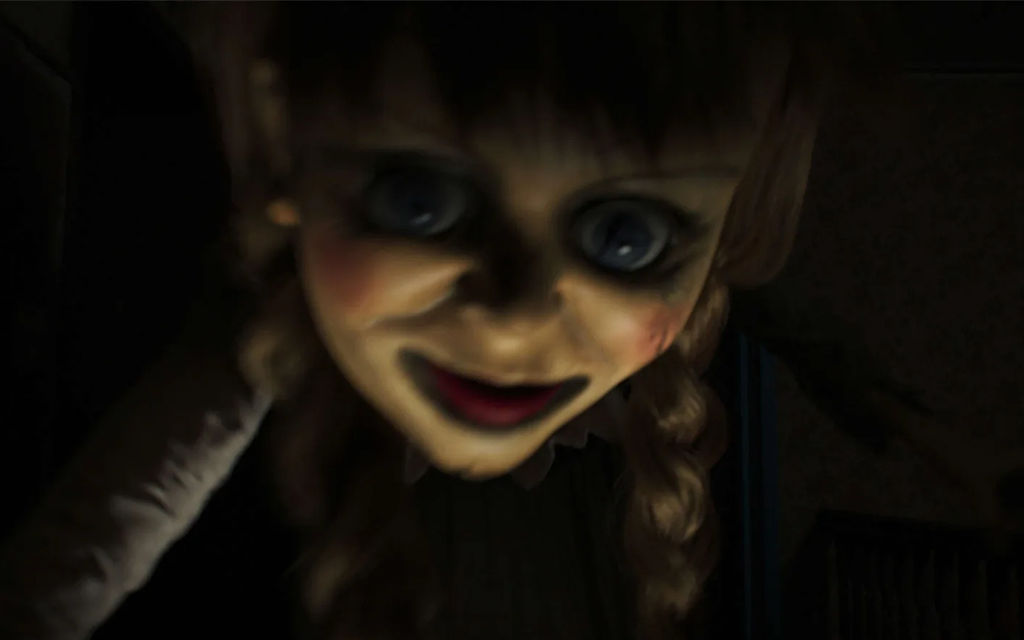
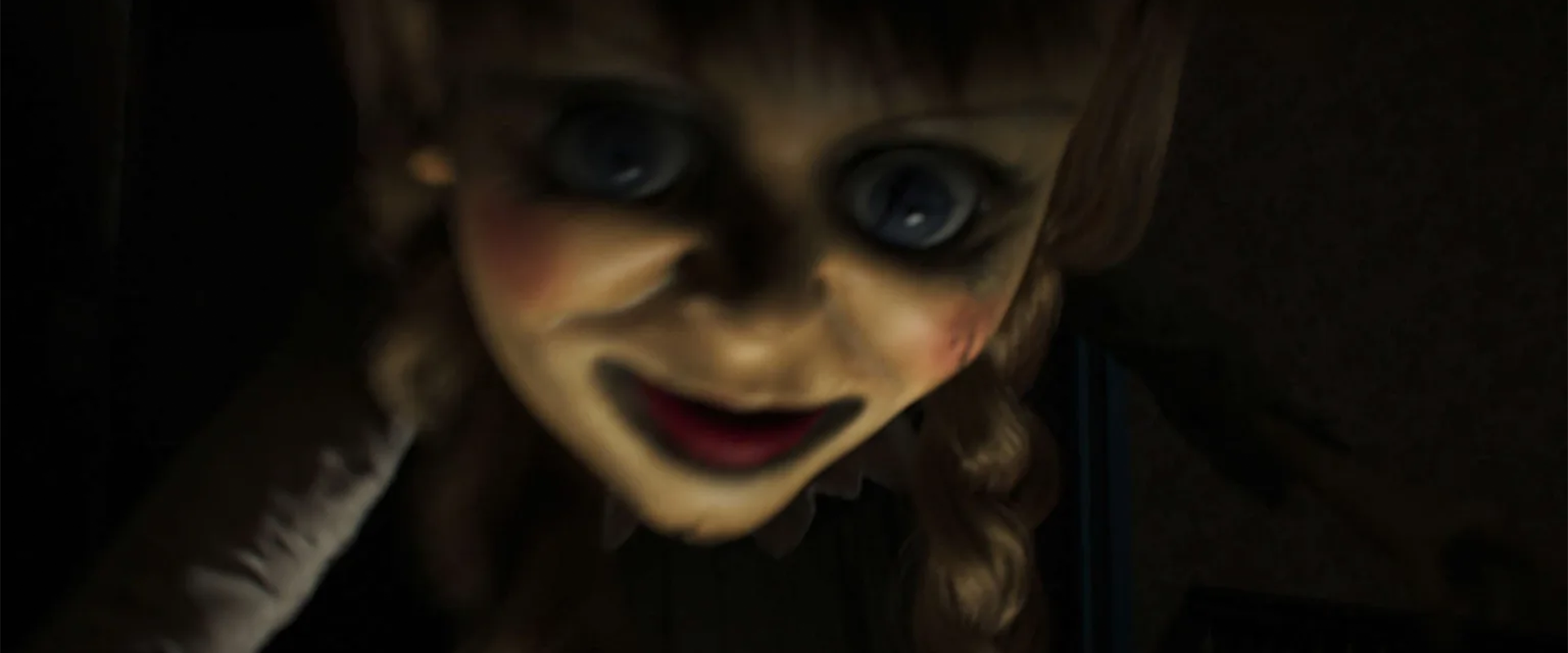
PH: The transformation of the Annabelle doll into a towering 12-foot entity is one of the film’s standout moments. Can you walk us through the creative and technical process of turning a familiar prop into a full CG nightmare?
Alex Millet: In a few shots, just before she stands up, we actually replaced the practical doll with a digital version. For this, we started with the original version of the doll, creating it as a CG asset, matching to the on-set reference.
The look of the 12-foot doll went through a couple rounds of redesign, and once the concept was approved by the director, we built the 12-foot version of Annabelle. Both versions were built as fully renderable assets with hair and cloth simulations, and we went through multiple iterations of the simulations to find the right look and feel for the giant dress material and hair. The transformation itself was another challenge as the 12-foot variant evolved into its own shape and wasn’t a simple scale-up of the doll. We were able to scale and transform the limb from one design to the other, and animated the poppy and painful-looking motion of the transformation.
PH: Abigail Arnold’s haunting smile has already become an iconic image from the film. How did you balance subtlety and realism when crafting such a small yet terrifying detail?
Alex Millet: The director provided us with a concept art he created for Abigail’s grin, and the goal for us was to replace the actress’s face with his concept and turn it into a creepy smile performance. We recreated the concept for different lighting scenarios, and developed a range of smile variations, ranging from neutral to wide extended smiles. The director was then able to select the right performance and the range of the smile that worked for the shots. A lot of the subtlety is in everything around the smile. The mouth only moves so much but the way the cheeks, nostrils, eyelids or even eyebrows, compress and deform, all contribute to the realism and expression. Once we had a selected range we refined the motion further, and the compositing team integrated the new face into the shot. We used this process for different shots, all in different lighting environments.
PH: The mirror hallway sequence is visually intense. What were the biggest technical or artistic hurdles in bringing that destruction to life?
Alex Millet: The main challenges of the hallway sequence were the volume of destruction and dealing with the mirror’s reflections. The mirror had to be either extended or replaced with our digital mirror throughout the sequence, and we had to be careful to maintain the actors’ reflections. But we also needed to replace the set, props, crew and camera rig reflections. We rebuilt the entire hallway as a CG asset and used our CG mirror to render accurate reflections of the hallway. As part of the hallway build, we added extra geometry behind the walls and floors to add complexity and something to reveal during the destruction. The destruction was made of different simulations with layered materials such as splintering wood chunks and crumbling drywall. The look of the wall and floor destruction took many iterations to get right as we needed to keep some key aspects in mind; the destruction needed some rhythm, pulse and force in the impacts, the wood should resist and splinter before cracking and flying out, and we also needed to maintain some consistency with the amount of debris and destruction throughout the sequence but without filling the room or distracting from the actor’s performance.
PH: Your team delivered 425 shots, ranging from large-scale environments to invisible fixes. How do you prioritize resources and manage such a broad spectrum of VFX work on one project?
Alex Millet: We were a small team with an aggressive timeline and an ever-evolving scope of work, so prioritizing and tight scheduling was crucial to delivery. The first priority is always to establish looks, either via concept work, tentpole shots. Once we have a target, we can build our assets, move towards keyshots, and schedule the sequences.
We mostly worked as a single team until about halfway through the production; we split our compositing team in two to have artists working on more sequences in parallel as some shots, such as the hallway destruction, were very demanding. Of course, there are always changes, new directions and surprises as the movie evolves, and that’s when the communication with the client side is key. It was great on this project and really helped us anticipate and stay on top of our delivery schedule.
PH: You used a wide suite of tools, including Houdini, Nuke, Maya, Solaris, and Vray. Were there any innovations or workflows unique to this project that you’re especially proud of?
Alex Millet: For the wedding changing room sequence, we had to replace the ceiling of a room made of mirrors. This meant our ceiling replacement needed to be seen through the many directions and layers of reflections. To achieve this, we started with a matte painting to create the ceiling and a geometry build of the room. Every shot was then tracked with the geometry of the room matchmoved so we could generate accurate reflections for every mirror. We did all the reflection work using 3D tools inside of Nuke and definitely dealt with heavier 3D scenes than we typically do in our compositing department.
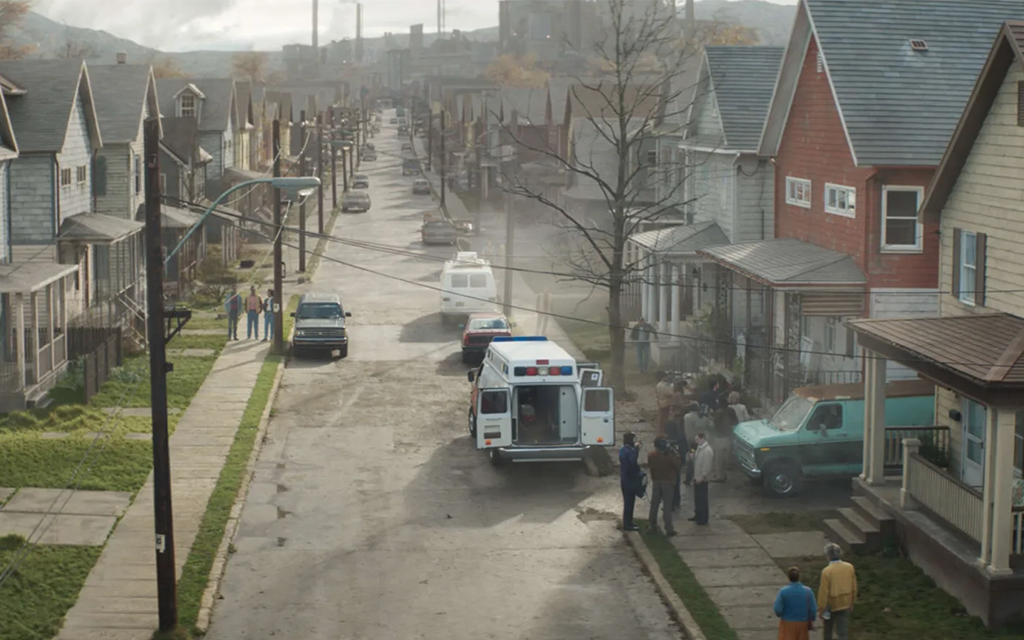
PH: The recreation of a Pennsylvania mill town environment is a striking example of digital worldbuilding. What level of detail went into ensuring it felt authentic and lived-in?
Alex Millet: We focused on various aspects to bring life to the digital environment. We spent time iterating on the weathering of the individual houses, paint chips, discoloration, etc. The production crew built 3 partial houses on set, and they were a huge help. We matched our CG houses to those as well as possible so they would blend seamlessly. We also populated the yards and sidewalks with different types of props, vegetation, and trees, each with some level of wind blowing through the leaves. In some sequences, we added cars driving, birds in the sky, people walking, or enhanced the existing crowd by adding more people. Lastly, we also created some slow-moving haze and atmosphere, as well as the constant smoke being emitted from the looming factory.
PH: Invisible effects are often overlooked but vital. Can you share an example of a subtle shot that audiences may not realize was heavily augmented?
Alex Millet: I hope that many of our environment shots fit the invisible effects category, as there were many more than one might suspect. Some other effects we created were the digital version of the baby to make it look wetter, the wedding room’s ceiling, some CG fire, CG glasses lenses, and a lot of TV and monitor screen inserts. In some shots, where the camera gets close to the cars, we also had to replace the set reflections that were visible in the car paint. We built CG versions of the cars that we could then use to reflect our CG environment, and replaced the plate reflections.
PH: Looking back, which sequence are you most proud of, and why?
Alex Millet: The hallway destruction was a tough but rewarding sequence to get through. The amount of destruction within our timeframe was a challenge and FX destructions are always fun to work on. The popping banister shot was one of the team’s favorites. The sequence where the dog gets thrown on the wall also held a special place in our heart. We built a full CG version of the dog and everyone was grinning the first time we saw him wagging his tail out of the animation department.
PH: What do you hope audiences take away from the VFX in The Conjuring: Last Rites, beyond just the scares?
Alex Millet: I hope audiences walk away feeling like they’ve been fully pulled into the story. The VFX is all about supporting that; heightening the suspense and making the moments of fear hit harder, but never drawing attention to itself. Ideally, they leave fully immersed in the world of the film, not thinking about how it was made.