

When Annabelle Grew Up: The Digital Domain Horror Pipeline
Novembre 14, 2025
Featured in Digital Production
425 shots, one terrifying doll, and a CG mill town: Digital Domain’s Alex Millet explains how his team built the horror of The Conjuring: Last Rites and kept it real.
With The Conjuring: Last Rites crossing the $500M mark to become the highest-grossing horror film of 2025, Digital Domain stood at the heart of the film’s supernatural terror. Under the supervision of Alex Millet, the studio delivered 425 shots ranging from invisible fixes to hero sequences: Annabelle’s monstrous transformation into a 12-foot stalker, Abigail Arnold’s unnerving smile, the haunted mirror’s shattering hallway nightmare, and an entire Pennsylvania mill town built in CG. Armed with Houdini, Nuke, Maya, Solaris, Photoshop, and V-Ray, the team balanced photorealism with dread, crafting visuals that were frighteningly real without ever slipping into camp. We sat down with Millet to discuss scope, artistry, and the technical pipelines behind conjuring digital horror.
Meet Alex Millet, a familiar face in the world of visual effects and someone whose résumé reads like a tour through modern cinema. Currently Visual Effects Supervisor at Digital Domain, Alex began his career as a lighting and look-development artist, later moving through roles as CG Supervisor, Sequence Supervisor and DFX Supervisor.
His filmography spans some of the most recognisable titles in contemporary filmmaking, including The Dark Knight Rises, Inception, Doctor Strange in the Multiverse of Madness and The Electric State. Each project sharpened his eye for realism and storytelling through light, texture and composition, preparing him for his latest haunting venture with The Conjuring: Last Rites (2025).
DP: Alex, can you start by outlining the scope of Digital Domain’s work on The Conjuring: Last Rites?
Alex Millet: The major effects were the Smurl street environment, the hallway destruction and the Annabelle doll sequence. Combined, these represented a little over half of the scope. On top of these, we also had a very complex ceiling replacement in the mirror room, a CG dog, some fire enhancement and along with many other invisible effects such as glasses reflections, TV insert, background replacement, etc. The team grew up to about 150 artists, and production lasted about 8 months.
DP: Which sequences do you personally consider the centerpiece of your team’s work, and why?
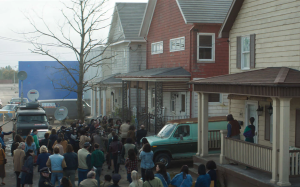
Alex Millet: The Smurl environment was a big part of our scope. We recreated the entire street surrounding the Smurls’ house and the looming factory. The environment was seen in multiple sequences at different times of day, each with different lighting and “life” in the neighbourhood. The hallway destruction was another big challenge because of all the destruction that we had to create. And, of course, Annabelle being so iconic, the sequence where she comes to life was an important one.

DP: Horror relies on timing and subtlety. How did you collaborate with the director and editorial team to ensure the VFX didn’t overwhelm, but instead amplified the tension?
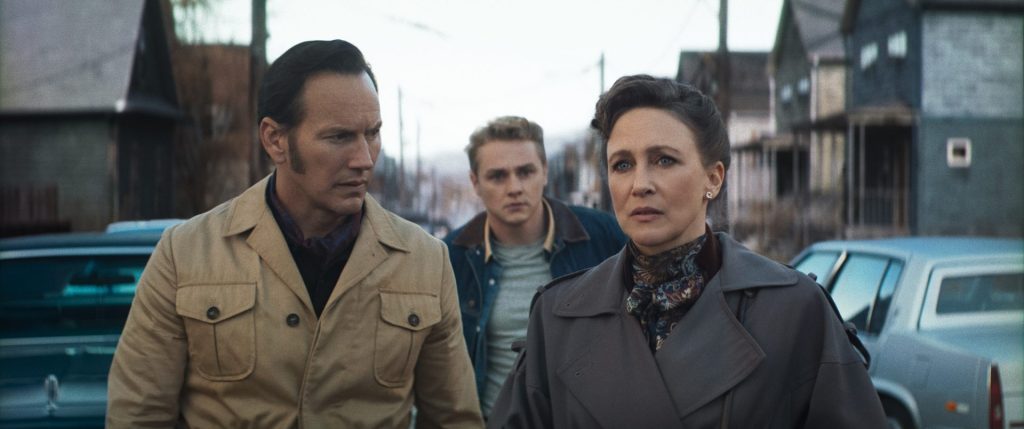
Alex Millet: Scott Edelstein was the VFX Supervisor on the production side and our main link with the director, Michael Chaves. Working with Scott and Michael was amazing; they were open to ideas and understood what was possible, which made it feel very collaborative.
The goal for us is always for our effect to disappear and blend with the on-set photography to complement the look and feeling the director created. We match every detail as closely as we can; down to the subtle amount of wind in the atmosphere. The production team did a great job anticipating our needs while shooting, which made it a lot easier to integrate our image and keep our effect non-distracting.

DP: The Annabelle transformation is one of the film’s signature moments. What were the creative conversations around taking an iconic prop and making it terrifying at a larger-than-life scale?
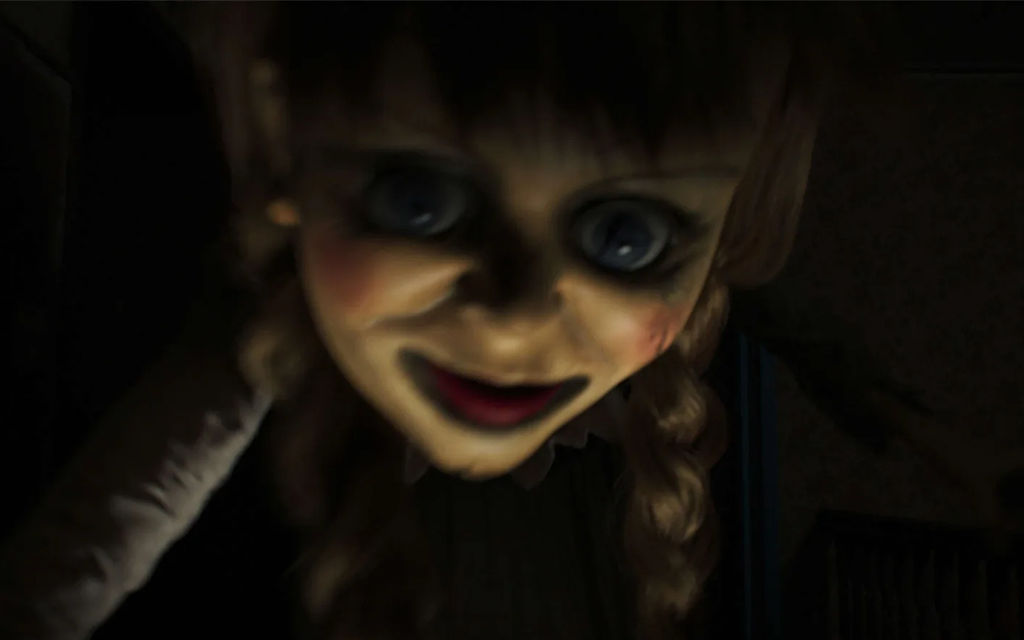
Alex Millet: We started by building a CG version of the original doll, then turned it into the 12-foot version. As the giant version came to life in the hallway, the iterative process began. The 12-foot version of Annabelle went through a few rounds of redesign to become the scary character that the director wanted to see. Once the new look was found, we received a concept and started rebuilding our asset and worked on a new post viz. Annabelle needed to look determined and threatening as she came out of the room, yet not totally in control of her body.
As the animation team took over, some aspects they focused on were Annabelle’s silhouette, matching some of the poses established during the concept phase, and the transformation. The transformation needed to feel abrupt, painful, and scary. We scaled different limbs at different times across the cut while working very closely with our CFX team to make sure the jerky motion did not break the dress simulation or make it distracting. The lighting also played a key role in the scare, keeping things dark yet revealing just enough to feel Annabelle’s presence, until the final jump scare with the flashlight.
DP: Abigail Arnold’s smile is disturbingly subtle. How much back-and-forth was involved in refining something so specific, yet so essential to the character’s menace?
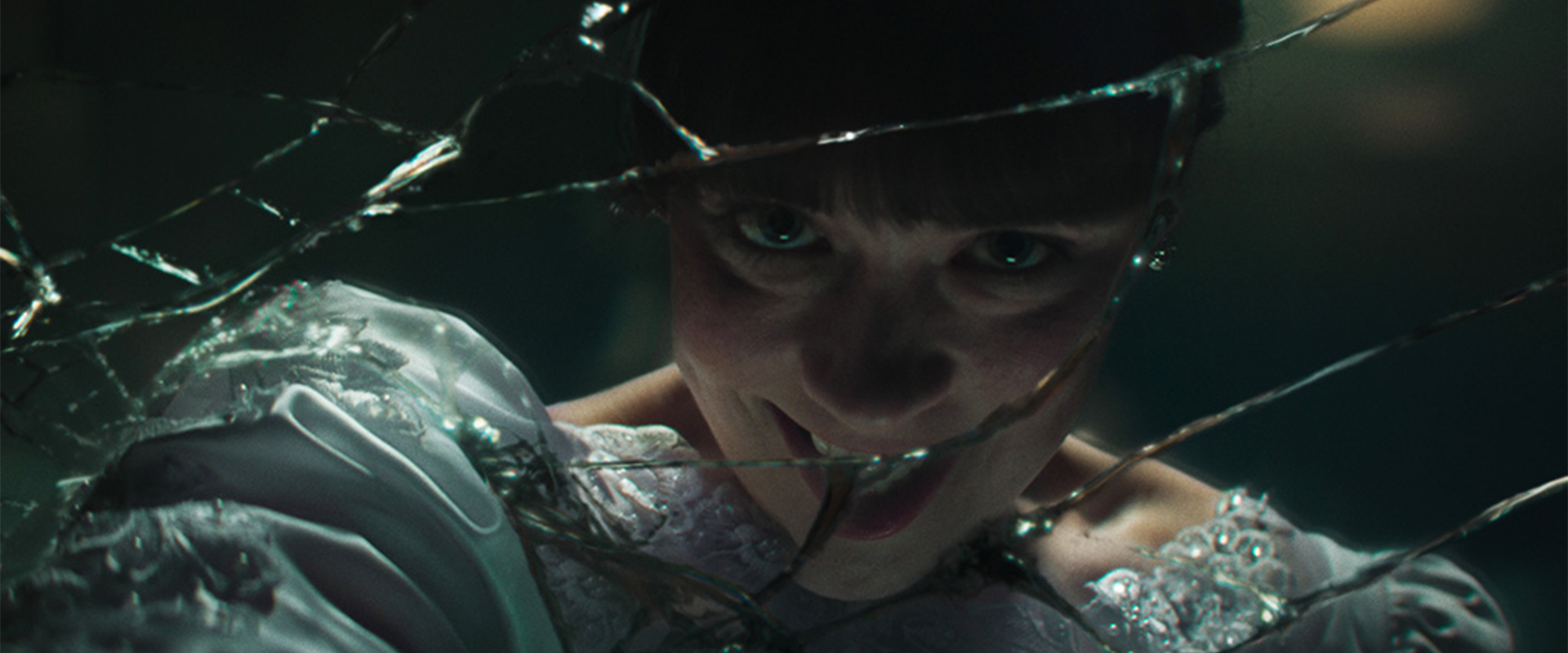
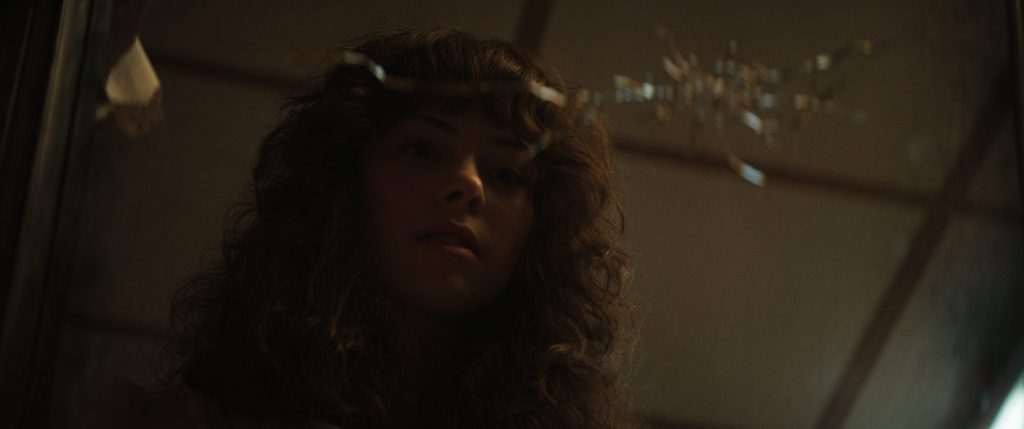
Alex Millet: We were lucky that the Director, Michael Chaves, is quite VFX-savvy, and provided us with a concept of the look and smile he wanted Abigail to have. The goal was to match his concept and bring her to life. We started with recreating the concept for different lighting scenarios, then developed a range of smile variations, ranging from neutral to wide extended smiles. The director was then able to select the right performance and the range of the smile that worked for the shots.
A lot of the subtlety is in everything around the smile. The mouth only moves so much, but the way the cheeks, nostrils, eyelids or even eyebrows, compress and deform, all contribute to the realism and expression. Once we had selected range we refined the motion further, and the compositing team integrated the new face into the shot. We used this process for different shots, all in different lighting environments.
DP: Horror effects can easily cross the line into unintentional comedy, the dreaded “absurdist 80s VHS fail.” How do you dial a CG effect into the sweet spot where it reads as horrifying, not parody?
Alex Millet: Here again, blending into the tone and vision established by the practical photography is always the most important for the effects. Our goal is always to make sure the VFX are as seamless as possible, and not distracting.
Other than matching the look, lighting and ambience of what was done on set, that also means making sure that any animation does not go over the top, and breaks the tension. The Abigail smile was a great example, we could get a much wider range for a smile but instead, the more subtle ones, and in some cases barely moving at all, kept her looking disturbing.

DP: Any tips for your peers on how to land that “maximum horror” effect faster in iteration, instead of burning weeks on trial and error?
Alex Millet: Hiding things is often a lot scarier than trying to explicitly create something scary. As VFX artists, we’re very analytical of our images and want to see every detail to make sure it’s perfect, but in this case, we needed to hide part of the image and let things fall into darkness. We’re still just as concerned with every detail; it’s more of an extra step: now that we know how it looks, what does it look like way darker? What parts are gone, and which ones are left. We, then, let the audience fill in the blanks.
DP: You’ve mentioned the Pennsylvania mill town environment. Can you walk us through how the team extended sets into a fully believable small town, while keeping continuity across day and night shots?
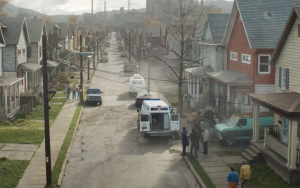
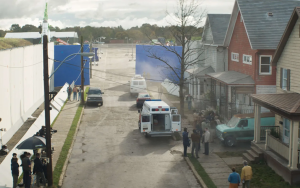
Alex Millet: We knew we were going to see the street in many different shots, angles and lighting scenarios; we just didn’t know what these were going to be until the edit stabilized. So it started with concept work, then committed pretty early on to building the entire street as a fully renderable CG asset.
We started with a rough 3D layout of the neighbourhood, then focused on the street the Smurls’ house was on. We built the houses in a modular way, like Lego blocks, and split them between the different floors and roofs, so we could easily swap the different pieces and create a lot of variations. This allowed us to start working on our assets to a high level of detail early on, and also prevented having to redo work if, for example, Scott or Michael wanted to move a particular house, or change the roof on another.

Once the VFX sup & director were happy with the look in some early development shots, we worked on the different lighting environments and added life with props, cars, atmosphere, etc. So having the street fully built made it easy to maintain continuity across the shots, or break it if we wanted to do so for creative reasons. Around the CG street, we used 2.5D, mixing matte painting with supporting geometry for the factory and background, and lastly, the far background and sky were 2D matte painting.
DP: Beyond the big hero moments, you delivered a large volume of invisible effects, reflections, vehicles, ceiling replacements. What kind of pipeline ensures consistency across such a wide range of tasks?
Alex Millet: Having a scalable pipeline is key. Many individual effects were only for a few shots, while others, like the Smurl street or the hallway destruction, spanned over 100+ shots. Having a single but scalable pipeline allows us to be nimble and iterate quickly to get started, but then scale up to handle any volume of shots. If things change, it also prevents us from having to go back and build things differently or with a different approach.
DP: Let’s talk specifically about the mirror sequence. How did you design your glass-break pipeline for that scene?
Alex Millet: We had to create the shattering glass in the hallway sequence as well as the crack that’s on the mirror throughout the movie. Glass is really unforgiving in the sense that it needs to be fully built for all the reflections and refractions to behave correctly; there is no shortcut. Our asset team built a CG version of the mirror first, ensuring the glass layer had the correct thickness and reflection behaviour.
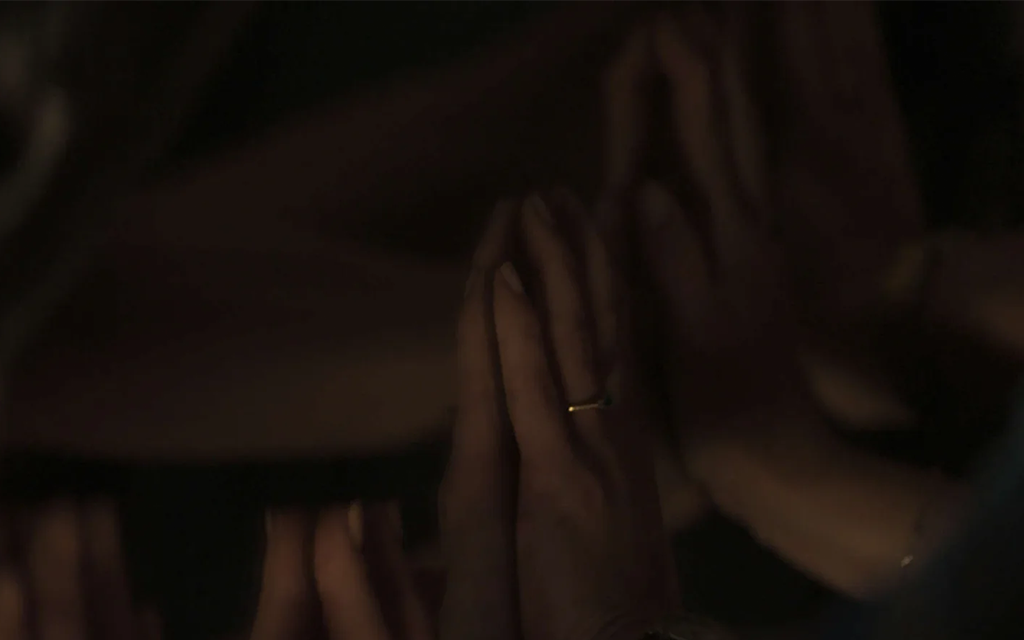
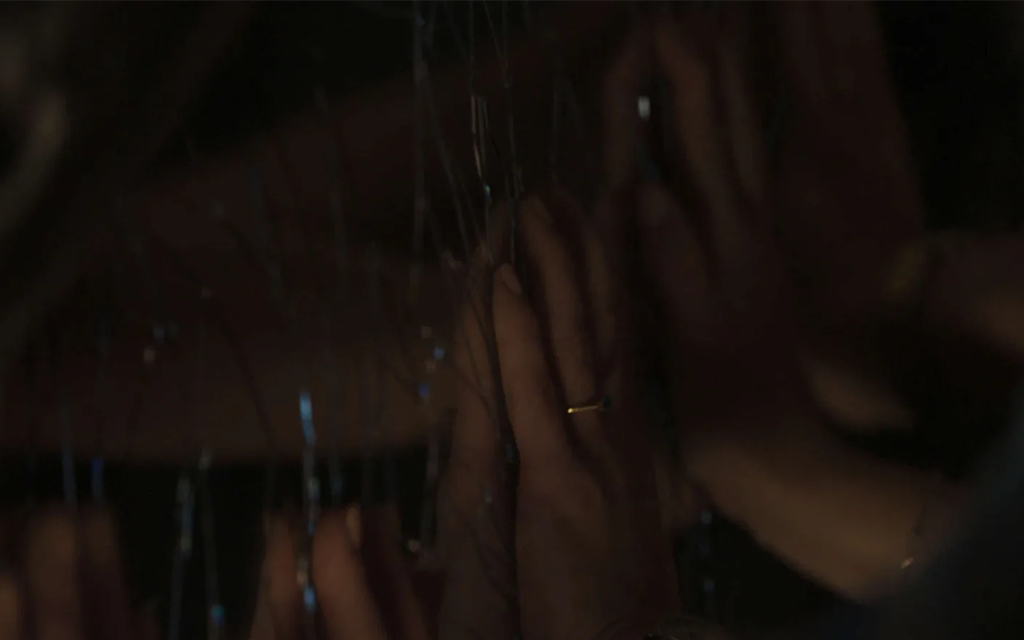
Then for the shattering, the FX team fractured the glass with an evolving crack. Fracture simulations don’t always result in the cleanest geometry and with glass, any imperfection can result in unwanted highlights. So after the glass was fractured in FX, we went back to the asset team and spent more time refining the geometry to make sure everything behaved correctly and looked as real as possible. For the static cracks, we had a different approach and started with a 2D concept of the overall shape, then sculpted it directly into the geometry.
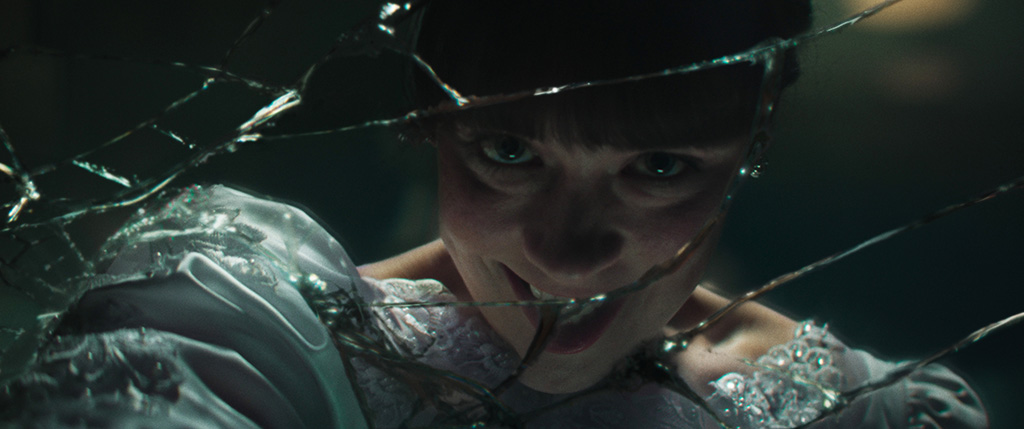
DP: The haunted mirror and hallway destruction sequence demanded complex simulation. What tools and workflows did you lean on to ensure the scene felt both physically credible and cinematically heightened?
Alex Millet: The hallway sequence was a challenge. We started with building a CG version of the hallway that had to be water-tight to work with the FX simulations. Our assets are mainly built in Maya for modelling, Mari for texturing, then Houdini & VRay for Lookdev.
Once our asset matched the set, we added some extra geometry behind the walls and floor, to be revealed during the destruction and added material variations to the debris. The next step was to animate the mirror moving through the wall and start working on the look of the broken wood and floorboard simulation.
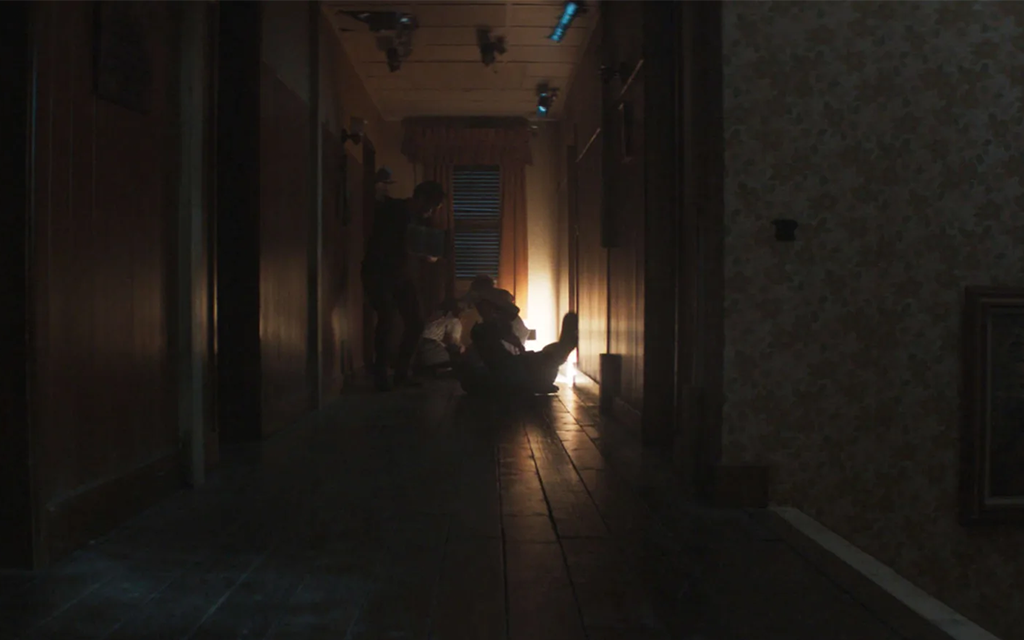
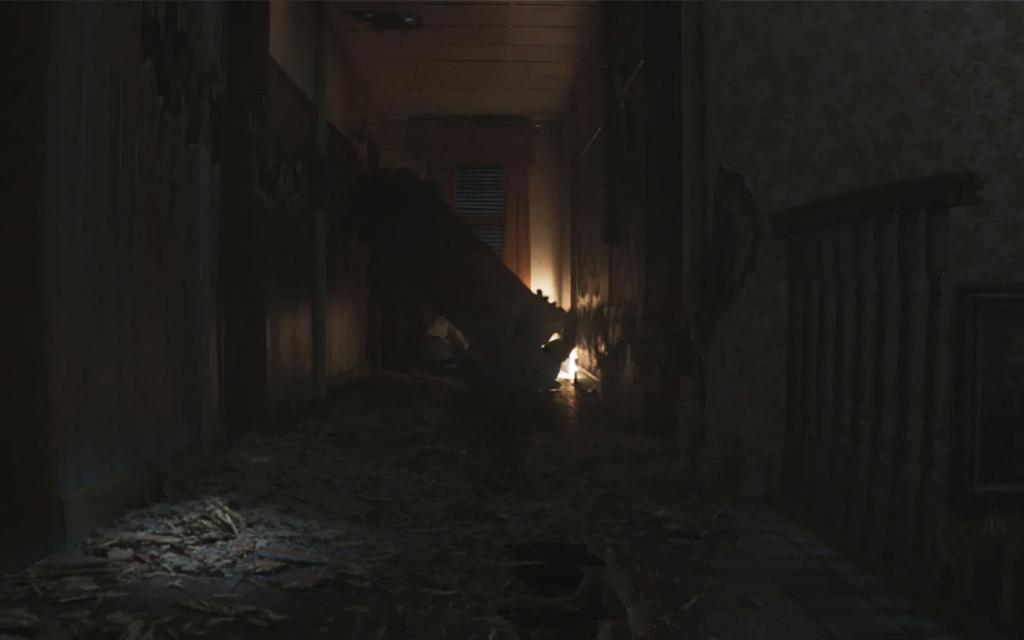
Our FX team, working in Houdini, did different iterations of breaking wood and drywall to find that rhythm and dynamic pop in the destruction. We also played with different amounts of smoke, either slowly filling the room or shooting from the impacts. We then went back to lookdev to create some procedural materials for the additional geometry.
That’s all the inside faces that didn’t exist in the original model and were created once the geometry was fractured. Some of the finer effects, like smoke or fine particles, went directly from the FX team to the compositing team, but the main fractured geometry was passed to the lighting team to render with the mirror and the rest of the hallway. The lighting team rendered everything with VRay and Solaris in Houdini, then passed it to the compositing team to put all the elements together in Nuke.
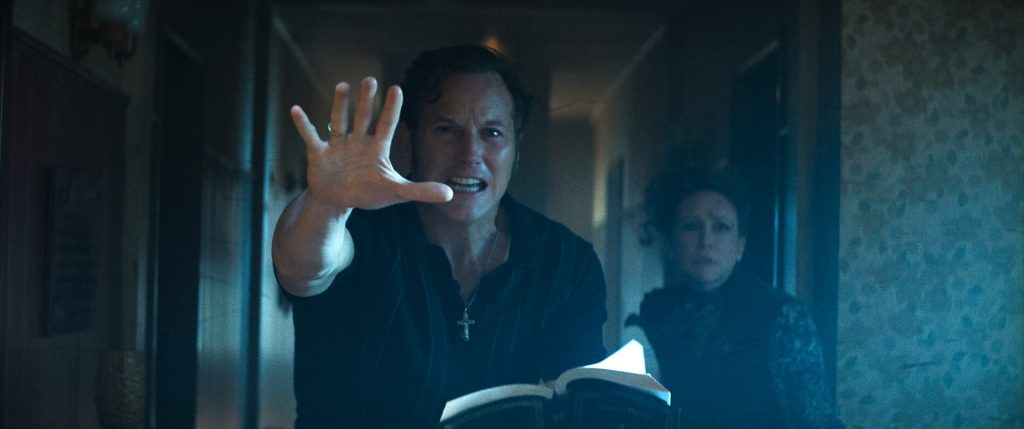
DP: How many iterations did it take to nail the timing and behavior of the breakage, and how did you balance simulation randomness with director’s notes?
Alex Millet: The biggest challenge was to tie in the propagating crack, which was an FX simulation, with the main cracks. The main cracks, under the actor’s hands, had a very specific art direction to look like they originated from the hand. They also needed the right timing to happen when the actors touched the mirror. We laid out the main impact points first, then matched the speed of the simulated propagating crack to tie everything in.
Once the timing worked, we tweaked the geometry of our propagating crack once more so the lines would connect with the main impacts. The final effect was meant to look like a single event, moving across the entire glass but with specific impact points tied to the actor’s performance..
DP: Looking back, what do you consider the biggest technical achievement of your team on The Conjuring: Last Rites?
Alex Millet: The hallway sequence was an interesting technical challenge; it came in late in the schedule, but required a full rebuild of the hallway and a heavy amount of FX destruction in almost every shot. The mirror was plowing through the walls and floors, and we needed to maintain some consistency in the destruction across the sequence.
We also had to be very careful of the actors’ reflections, as we sometimes had to replace the mirror with a CG one for the animation and destruction to work, but we needed to maintain the actors’ reflections. Overall, the biggest challenge of the project was the aggressive timeline and wide scope of work; we had a big environment build with the Smurl street, a lot of FX simulation, some animation and character work with Annabelle and Abigail, a huge oner shot, and the list goes on. The team did an amazing job delivering this project on time and without any outstanding notes.