

《小丑回魂:欢迎来到德里镇》:由Mitchell Drain(数字王国视效总监)与Nikos Kalaitzidis(数字王国视效总监),连同Bob White(数字王国CG主管)、Ellen Hoffmann(数字王国动画总监),以及Nelson Sousa(数字王国资产总监)讲述幕后故事 / 阅读全文
2025年12月11日
Featured in Art of VFX
Back in 2020, Mitchell Drain gave us a behind-the-scenes look at Digital Domain’s visual effects work on Perry Mason. Since then, he has contributed to major projects including The Last of Us, The Electric State, and A Minecraft Movie.
In 2018, Nikos Kalaitzidis gave us an in-depth look at the visual effects of Shadow. Since then, he’s brought his expertise to major productions like Free Guy, The Mandalorian, Ahsoka, and Thunderbolts*.
With more than two decades of experience in visual effects, Bob White has contributed his talents to studios like Zoic Studios and Method Studios before becoming part of Digital Domain in 2019.
We caught up with Ellen Hoffmann in 2025 as she discussed her Animation work on Venom: The Last Dance. Her next projects included Captain America: Brave New World, The Electric State, and Fountain of Youth.
Since beginning his VFX journey in 2003 at The Orphanage, Nelson Sousa has worked with renowned studios such as Rhythm & Hues, Sony Pictures Imageworks, and Digital Domain. His credits include high-profile projects like Sin City, Edge of Tomorrow, Avengers: Endgame, and Thunderbolts*.
How did your collaboration with Production VFX Supervisor Daryl Sawchuk begin, and what were the earliest creative discussions around bringing the Skeleton Man to life for Welcome to Derry?
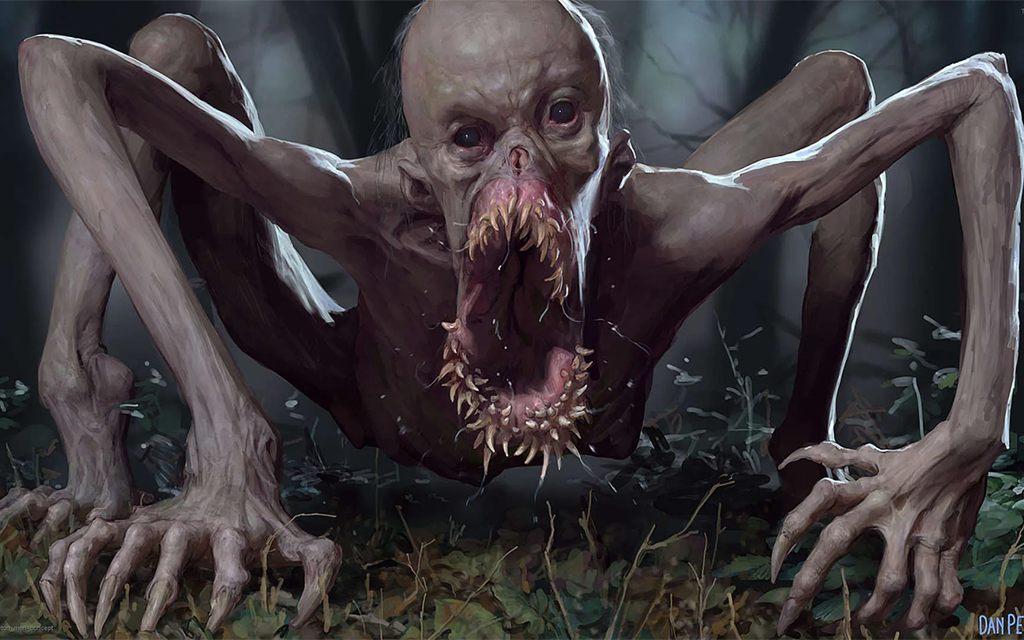
Nikos Kalaitzidis: Upon joining the project, Daryl had already begun exploring concepts for the ‘Skeleton Man’ with director Andy Muschietti. They shared artwork from Dan A. Peacock and Max Verehin, and while we drew inspiration from the horrifically beautiful and surreal imagery of both, Andy ultimately selected a Dan A. Peacock illustration as our primary guide. Peter Schoelier was cast as the Skeleton Man; his tall, slender physique was ideal for bridging the gap between the concept art and reality. Our task was to create a photorealistic creature that synthesized the illustration’s look with the actor’s physical attributes, all while remaining faithful to the creature design legacy of Pennywise from previous IT productions.
Mitch Drain: I came onto the show as shot production began. Most design decisions had been made as the Skeleton Man asset was created. Some of our first discussions revolved around movement and storytelling.
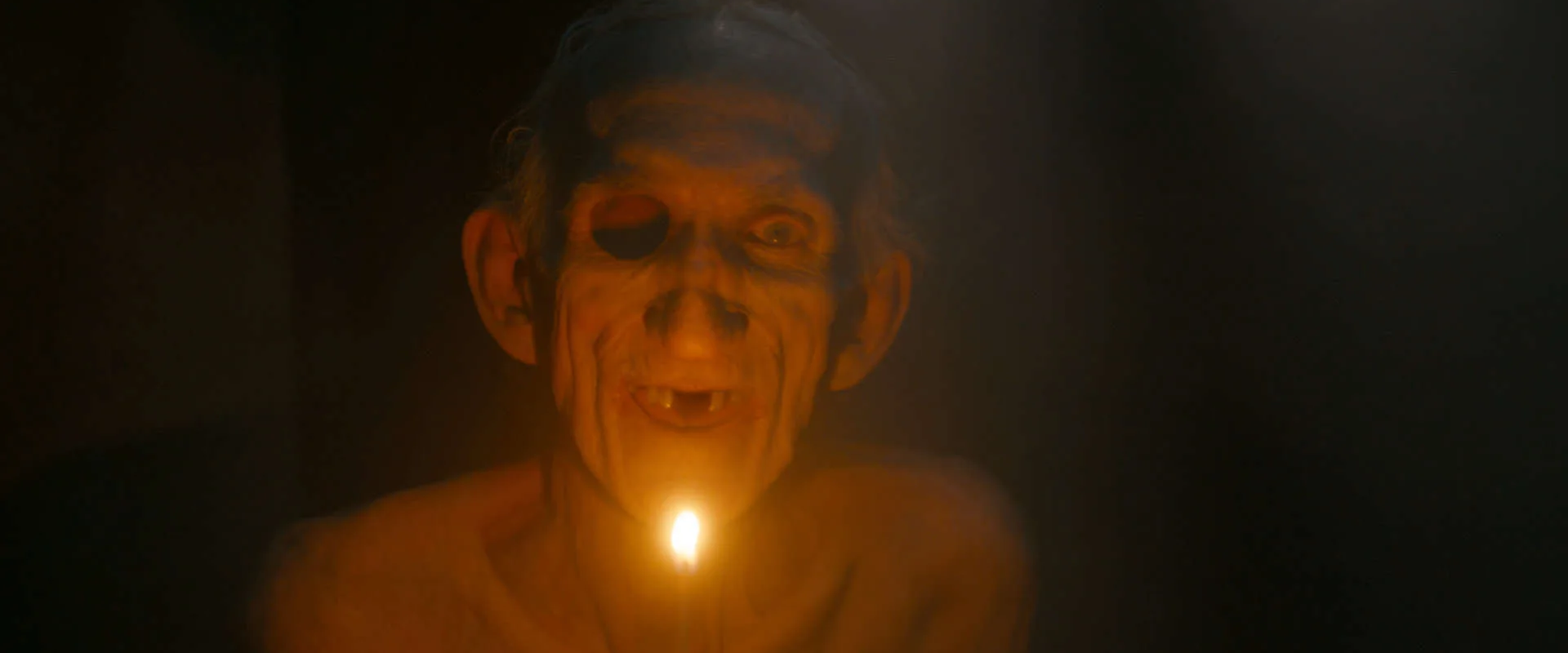
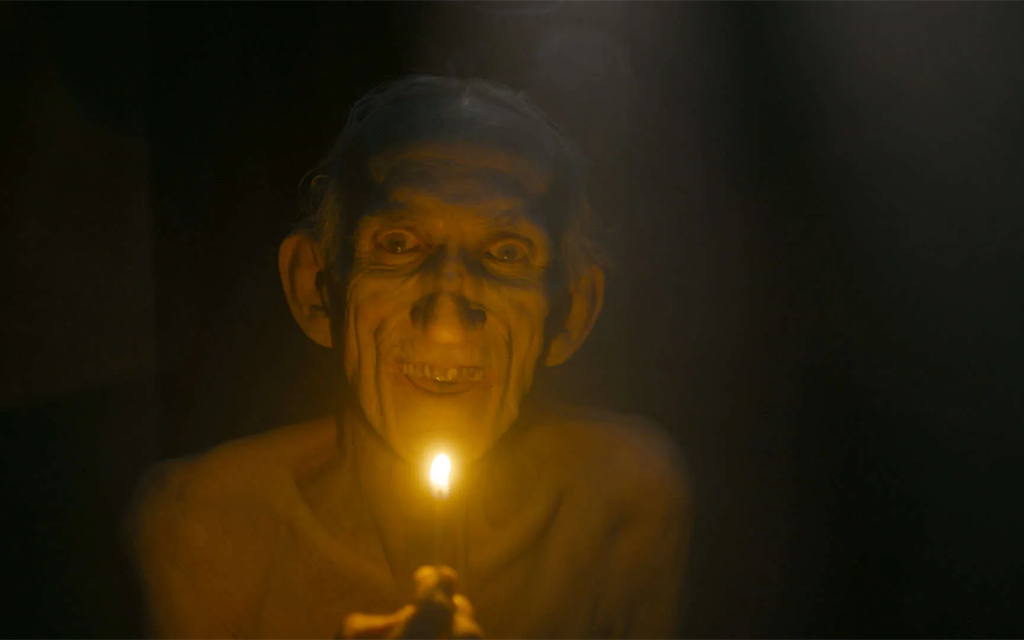
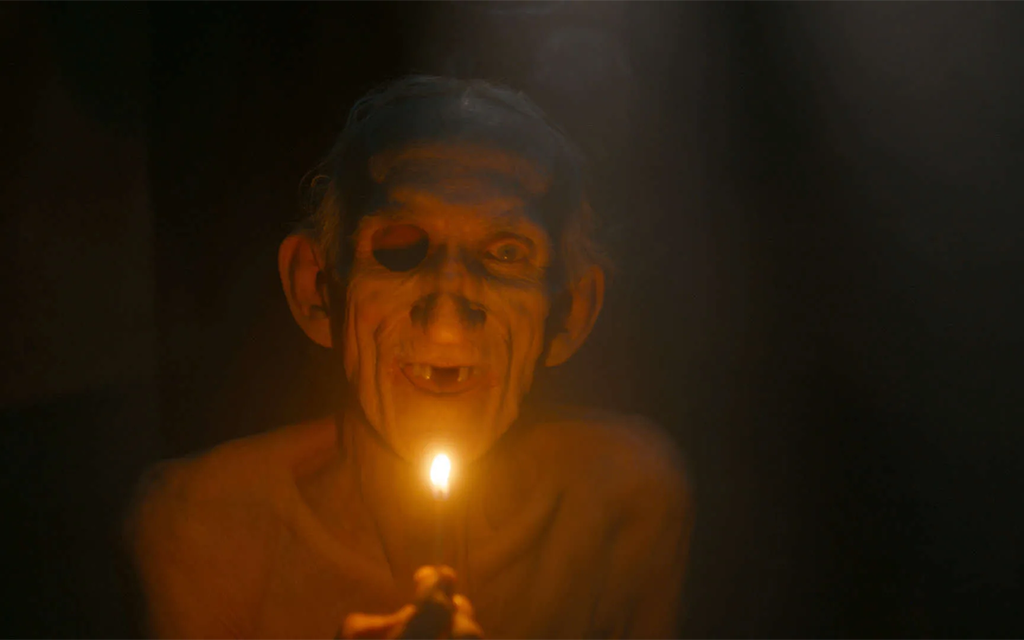
The Skeleton Man is first introduced as a frail old man in the freak-show. How did you approach enhancing the actor’s appearance—such as removing the eye and teeth—while keeping it grounded in the live-action lighting?
Nikos Kalaitzidis: It is amazing the lengths we go to for VFX research. We scoured the internet for references of empty eye sockets to understand how the skin appears without an eyeball. We even found footage of a man who could actually push his fingers from inside his mouth through to his empty eye socket…ewww.
Mitch Drain: The lighting was a key component to the success of changing the old man’s appearance. We knew that the missing eye and teeth were going to be revealed near the end of the sequence however, we still had to maintain continuity throughout. We knew that we needed a hero element so, we could not create lesser elements as we would see the effect in close-up. We were provided with a scan of the actor that allowed us to create a believable 3D representation of his likeness. We then sculpted the missing eye and teeth details into that model, and matchmoved the head and performance. The scene lighting was moody and really helped sell the depth of the missing eye with the use of only a match to light him. Careful CG lighting and compositing completed the effect.
When transitioning from the actor to the fully transformed creature, what were the main challenges in blending his likeness into something distinctly inhuman without losing the character’s identity?
Mitch Drain: Keeping visual continuity between Peter (the actor), and the Skeleton Man evolved throughout the process. Early concepts had many more drastic differences between the characters and it was decided that the transitional changes would be subtle at first and escalate to the point that the only remnants of Peter were a missing eye, wardrobe and some leftover hair. First, you see Peter chasing the boy, losing balance and once he regains balance he is now taller, with a longer stride. Eventually, his growth causes his shoes to tear and they are left behind, however the transition is still subtle and looks like the actor. Finally, the character drops to all fours and completes his transformation into the Skeleton Man and continues his pursuit.
The final Skeleton Man design evolved from a 2D concept illustration. Can you walk us through how that artwork informed your 3D sculpt and how the creature’s look changed over production?
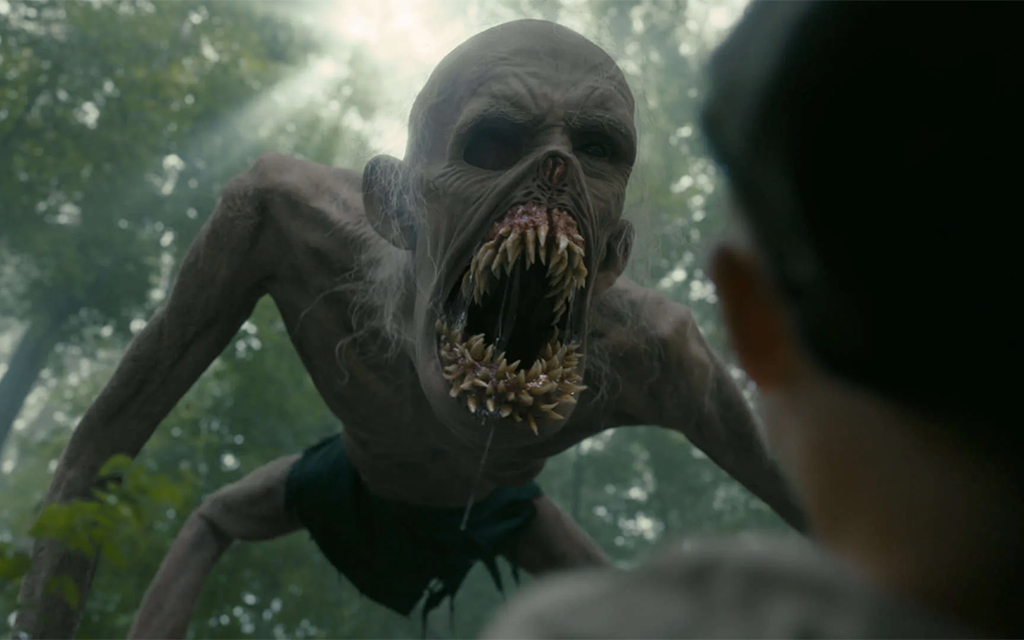
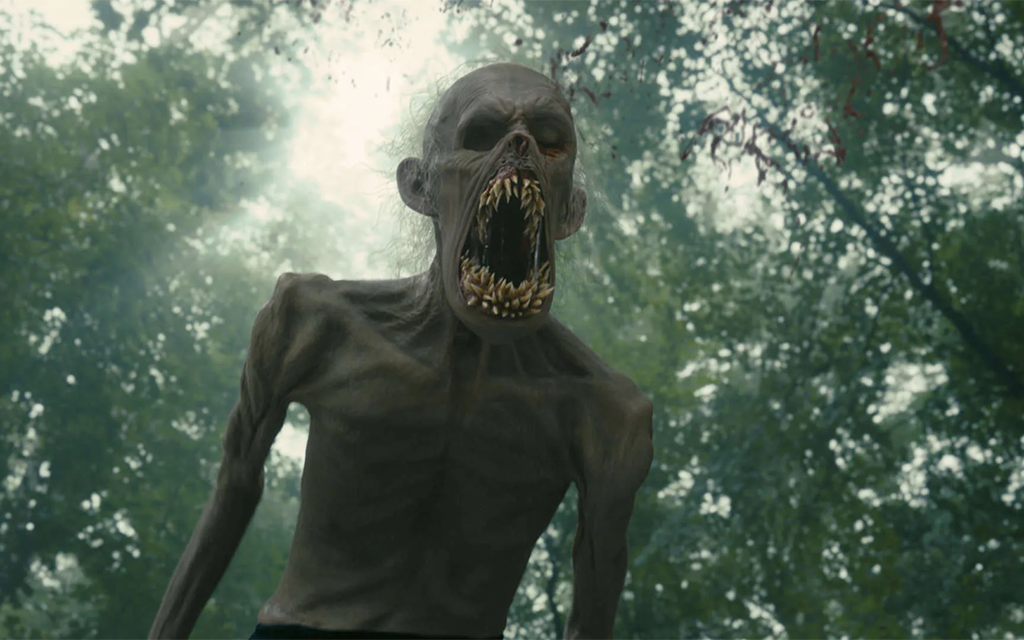
Nikos Kalaitzidis: Finding the correct 3D look for Skeleton Man was a journey. We started by blending our Genman asset with the actor’s scan, sculpting the head and neck to capture the creature’s grotesque features—the bell-shaped skull, the over-extended jaw, the gazillion teeth and the empty eye socket. To test the body, Animation posed the asset to match the approved illustration. Achieving that pose required severely breaking the rig and the model began to take shape into a creature out of John Carpenter’s The Thing. It was weird and it felt right!
Also, even though the actor, Peter, had a thin physique we wanted to push the design to appear more emaciated, and we really wanted to see the skin defined by his skeleton. In regards to his hands, fingers, feet and toes, we turned to AI to come up with different concepts to help us land on designs with dirty fingernails.
Between the sculpting of the head, neck and the anim poses then it became immediately clear that our Genman needed a significant upgrade in resolution to support the creation of Skeleton Man.
Gen Man 2.0 played a significant role in building the character. What advantages did this updated base mesh system offer, and how did it impact the modeling, rigging and deformation work on the Skeleton Man?
Bob White: The updates with Gen Man 2.0 help support a higher fidelity when we ingest a scan like this and gives us defaults and standards to work from. We get an initial level of basic face shapes, textures, and rig that are a great foundation to work from. In a character like Skeleton Man, obviously, we had to push out new topology for his face after his final transformation, but using Gen Man 2.0 let us push his face a lot closer to the final deformation shapes before we branched out into unique topology.
Nelson Sousa: We utilized Gen Man 2.0, which features an optimized, updated topology that incorporates anatomical landmarks and flows with the musculature. This allowed us to achieve a much tighter, anatomically correct model with a lower polygon count. An advantage of this is that we relied only on displacement maps for tertiary detail, we excluded all secondary detail because it was built into the base mesh. Because the topology matched the anatomy more closely, we could easily deform Skeleton Man into his extreme body shapes without requiring a complete muscle setup. This resulted in faster turnarounds and kept overall costs down.
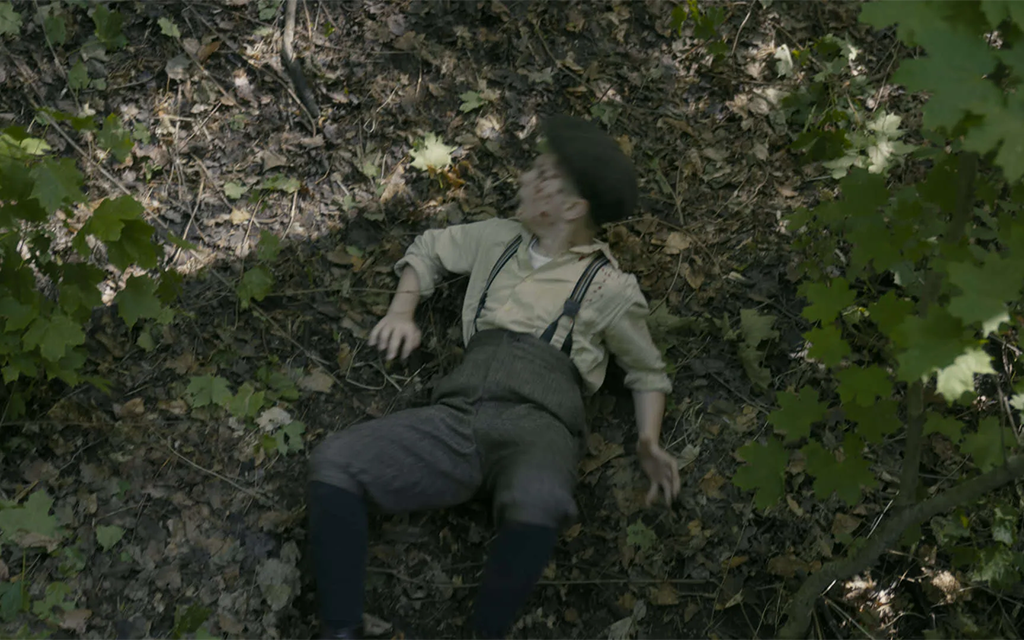
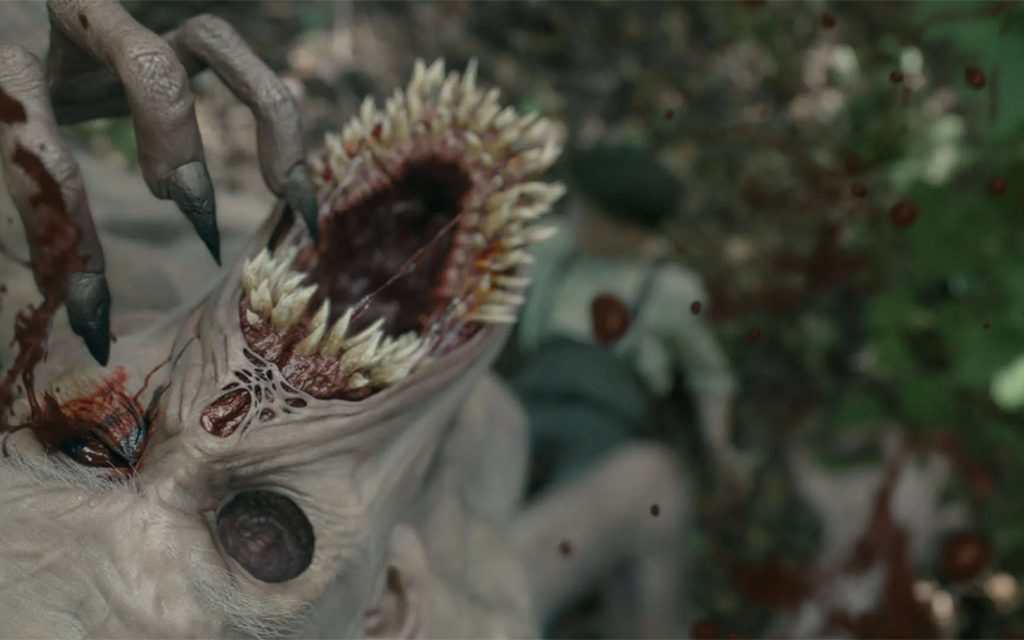
The muscular structure and skin simulations are extremely detailed, especially in the neck and shoulders. How did you balance sculpted detail versus simulated movement to achieve a realistic grotesque anatomy?
Mitch Drain: The process of shot modelling was employed extensively to create the realistic skin slide and muscle triggerings. There is a lot of movement and motion blur, which would often dilute the muscle and skin deformations to the point where they couldn’t be seen. The exaggerated nature of the character necessitated an art directable solution to help the movement read.
Hair, peach fuzz, and skin surface detail add a lot to the unsettling realism. How did your grooming team use Samson and custom variations to create those nuanced layers of detail?
Bob White: We ended up having to create multiple versions of the groom to support the growth of the character because of the extremes the geo is getting pushed to. We iterated on the peach fuzz a lot because as he grew it became integral in keeping him from looking rubbery as his skin grew by such a large amount.
Nelson Sousa: We used Samson to create and match the actor’s hair style (Peter’s main hair, flyaways, eyebrows, and facial hair). For the full-body peach fuzz, we also used Samson and created two distinct layers:
- A. Short fuzz: Denser, with high-frequency noise, length and direction variation, and bend.
- B. Long fuzz: Less dense, with some low-frequency curls, noise, and bend, making it more visible in the asset’s silhouette.
The transformation required blending three separate rigs, each at different scales. Can you explain the technical and creative hurdles behind synchronizing these versions while keeping the animation coherent?
Bob White: As with all rigs, scaling them, (and particularly scaling just a part of them) is a recipe for pain. Displacement values get jacked, grooms go bonkers, it’s never fun. In this character, we had three rigs that would constrain to each other, and we just stayed aware that certain parts would be broken at different times.
Ellen Hoffmann: The key animation challenge was making the shift readable—going from a light, fast runner to a heavy, long-legged creature with a completely new sense of weight.
Scaling his limbs independently while still keeping his balance and physical believability also gave us room to push shapes and motion creatively. Peter starts in a normal run, then, as the transformation hits, he collapses forward, stumbles, and drops into an ape-like gait. All rigs needed to share the same core motion so the team could swap between them seamlessly.
Ellen Hoffmann’s animation team blended contortionist-inspired poses with feline-like movement. What guided the physical language of the creature, and how did you preserve the actor’s essence through that evolution?
Mitch Drain: The character’s movement underwent an evolution throughout the shot production process. Before the transformation, it was essential to keep the body language Peter-recognizable. As the sequence unfolds, we see less of Peter and more of Skeleton Man’s particular movement take over. Initially, we were provided with footage of contortionists and actors performing in various creepy ways as our reference. After animation tests and even some design changes, it was decided that we would have movements more based in physical reality. We had some reference of big cat and gorilla movements to help understand how he would go from a bipedal to quadrupedal gait. Daryl was also great at sending us videos and even performing some actions himself.
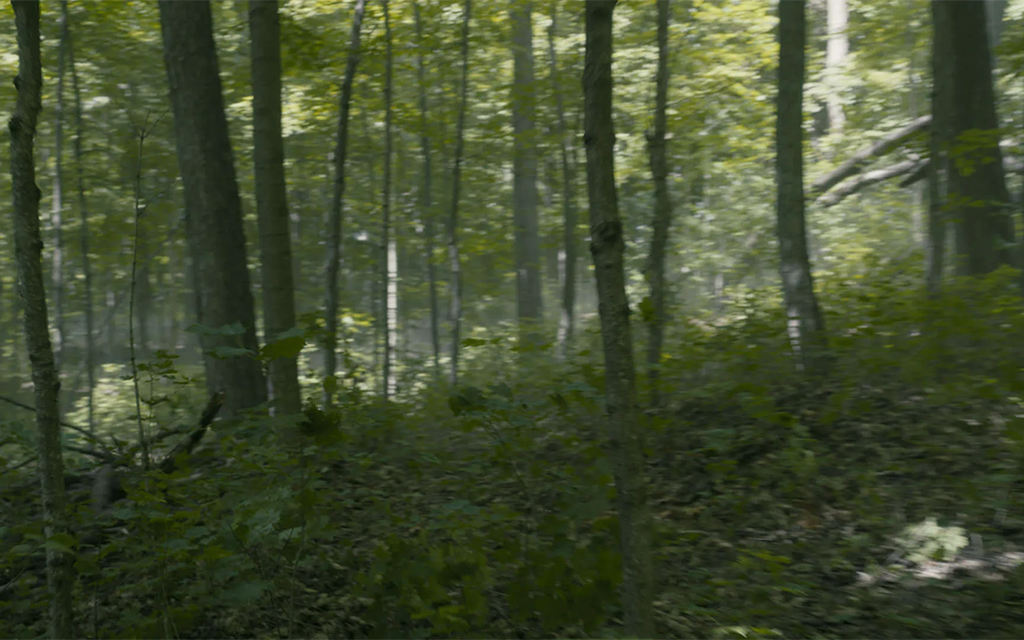
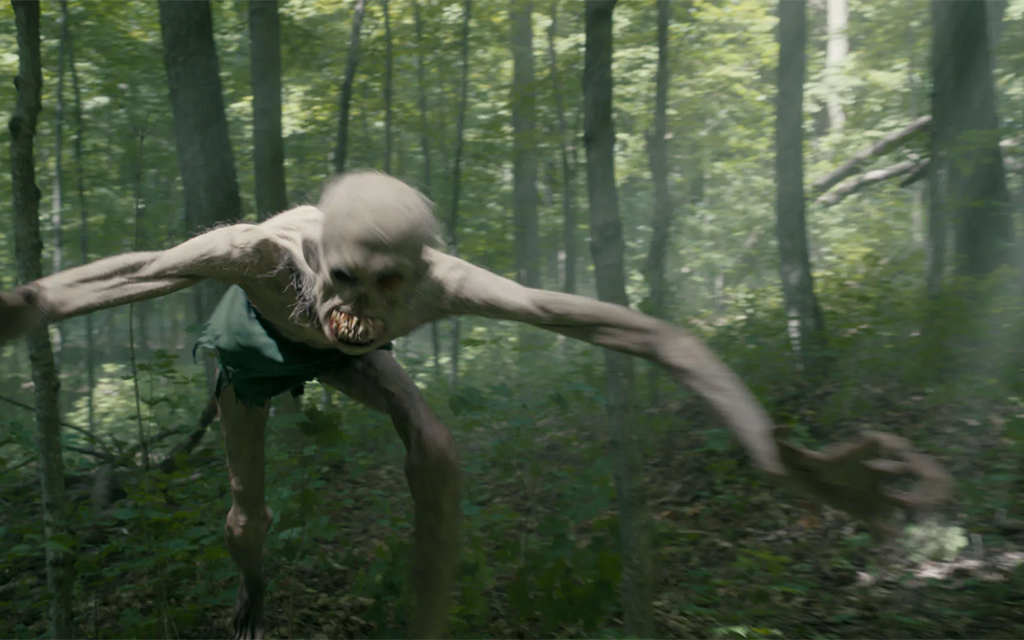
Compositing played a huge role in preserving skin tone, avoiding a waxy look, and integrating varied forest lighting. What were the biggest challenges Randy Ruan’s team faced to keep the Skeleton Man visually consistent?
Mitch Drain: Randy and the compositing team were essential to maintaining continuity of the character throughout the sequence. The skin tone and texture is an integral part of the overall transformation from Peter to the Skeleton Man. This was a challenge for compositing because it was also a subtle story point. Also, the elements of muscle and skin were balanced within each shot for maximum effect as well as integrating all of the secondary elements (bushes, leaves and ground displacement).
The transformation features complex elements—like mouth distortion, head shaking, drool, and wetness. How did the compositing and lighting teams collaborate to integrate these FX elements seamlessly into the plates?
Mitch Drain: There was a significant back and forth between departments. Lighting and FX would create elements, often with input from compositing, that would then need to be integrated in comp. The trick was the balance of those elements and how much or little to show. This was particularly important for the transformation because, as robust as the model, texture and rigs were, we needed to be nimble and be able to make changes quickly, sometimes without time to go back to anim and turnaround new elements. Tracking, projection and grid warping tools all helped to keep the transformation as smooth as possible.
Digital Domain also enhanced the forest environment and added interaction like foliage displacement and kicked-up dirt. How did you ensure these environmental effects matched the creature’s speed, weight, and presence during the chase?
Mitch Drain: It was important to have approved animations to use as collision with the FX departments foliage simulations. Any changes to animation would require new sims and FX animations based upon the performance. Some of these effects are also an aesthetic done to taste which required iterations of secondary displacements, like the movement of foliage not directly interacting with the character. A subtle wave of air displacement or secondary movement of leaves and ground were all needed to sell the weight and speed. Of course, those kinds of things can be overdone and become distracting. We worked closely with Daryl to achieve the right balance.
How long have you worked on this show?
Nikos Kalaitzidis: I came onto the show on a memorable Halloween, October 31, 2023.
Mitch Drain: I was a late-comer, beginning work on the show in September of 2024 through January of 2025. Digital Domain had begun asset work almost a year earlier.
What is your next project?
Mitch Drain: I have recently wrapped work on an action film for Skydance Media and Apple Original Films.
A big thanks for your time.